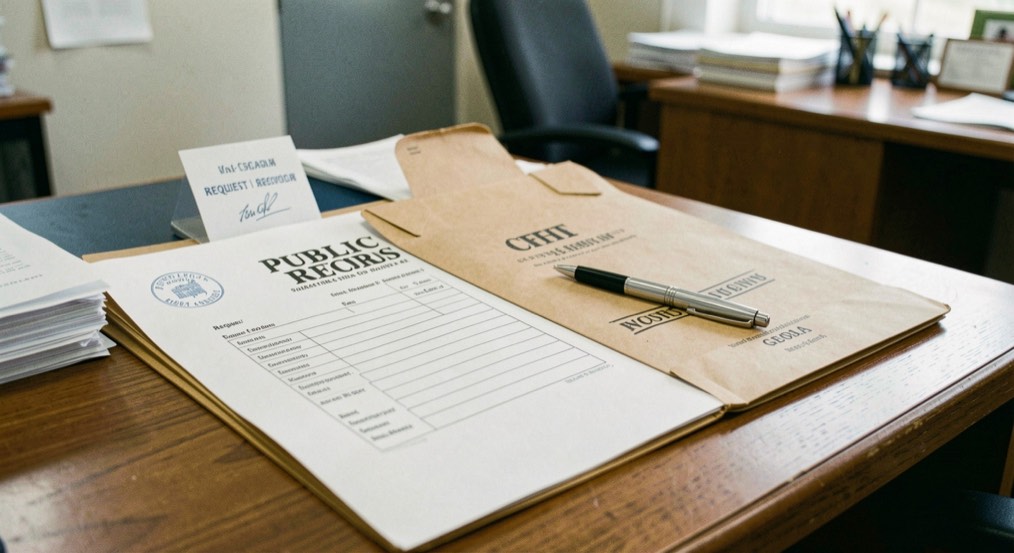
An open records request is a letter, an email or sometimes a phone call that puts a public agency on a statutory clock. In Georgia the clock is three business days: the agency must respond within that window, either producing the records, giving a timeline for producing them, or citing the specific statute subsection it claims lets it withhold them. The power of the law is not that agencies always comply; it is that they must answer, in writing, on a deadline.
For BSL advocates this is not an abstract civics lesson. When a city claims pit bulls drive its bite statistics, the intake logs, incident reports and enforcement cost figures behind that claim are public records. When a council member says the shelter is overwhelmed, the euthanasia and intake numbers are public records. The entire case against breed bans is built from documents that open records laws compel governments to hand over.
The reference I recommend for navigating this material in Georgia is The Georgia Records Desk, a plain-English guide that maps which state office holds which document, from open records mechanics to vital records and court clerk filings.
The Three-Day Rule and What a Response Must Contain
Under Georgia's Open Records Act, O.C.G.A. § 50-18-70 and following, an agency that receives a request has three business days to respond. A proper response does one of three things: produces the records, provides a specific timetable for producing them, or cites the exemption it relies on, and that citation must name a subsection of § 50-18-72, not a vague privacy claim. An agency that answers with silence has already broken the law, and that failure is itself documentable.
The request can be oral or written, though written requests are the ones you can prove. Keep it narrow: name the record series, the date range and the office you believe holds it. A request for "all bite reports" invites a delay; a request for "dog bite incident reports filed by Animal Control between January 2024 and June 2026" gives the clerk a findable target.
What It Costs: Copy Fees and Labor Charges
Georgia caps what an agency may charge. The fee schedule allows a per-page copying charge, commonly twenty-five cents, and labor charges for search and retrieval are capped at the hourly rate of the lowest-paid employee qualified to do the work, with the first portion of time free. Above a stated estimate threshold the agency may require prepayment, which is why a narrow request also stays cheap.
Two habits save money and time. Ask for electronic copies where they exist, because a PDF of an incident log costs the agency nothing to send and usually nothing to you. And ask the agency to itemize any estimate before agreeing to it, because a $500 estimate built on a paralegal's rate instead of the lowest-paid qualified employee's is a negotiable error, not a wall.
Open Meetings: The Records Made in Public
Georgia's Open Meetings Act is the companion law: public bodies must post written notice ahead of meetings, may only close a session by a recorded majority vote for a listed reason, and face a misdemeanor fine for knowing violations. Citizens hold a window of time after a violation to sue, and minutes of closed sessions must be kept for later review.
When a city council rushes a breed ban through, the open meetings rules are the first audit trail to check: Was the ordinance on the posted agenda? Was the vote taken in public? Were minutes filed? A surprising share of bad local legislation is procedurally soft, and the open meetings file is where that softness is proven.
Birth, Death and the Records Nobody Thinks About
Vital records sit in a different office entirely. In Georgia, birth and death certificates are registered and certified by the Department of Public Health's Vital Records office, with orders handled through listed vendors or by mail. They are not open records; access is restricted by statute to the person named and close family. Knowing which documents are open and which are restricted is half of working the system, because it tells you which door to knock on first.
Clerk of Superior Court: Where Filings Become Searchable
Court filings, property records and liens live with the superior court clerk of each county, and Georgia runs a shared search through the Georgia Superior Court Clerks' Cooperative Authority. The authority operates a statewide index, a filing alert service that emails you when a document lands on a name or parcel you follow, and a paid premium tier for deeper searching.
For advocates the use is concrete: foreclosure and lien filings show you which landlords are pressuring tenants with dogs, civil dockets show whether a municipality has ever been sued over its animal ordinance, and property records establish who actually owns the building whose "no pit bulls" lease clause a tenant is fighting. The filing alert service turns the record into a tripwire that tells you when something new lands.
Putting the Machinery to Work
When an agency misses the clock or leans on an exemption it cannot cite, the next steps are written into the same law: a complaint through the Attorney General's open government mediation channel, and behind it a superior court action in which a judge can order the records released and, for denials made without substantial justification, shift attorney's fees to the agency. Most disputes end at the mediation letter, because a statute with a deadline and a fee-shift clause is a different negotiating partner than a polite email.
The pattern that wins is always the same: request the records the government used to justify the law, then compare them to the claims made in public. Georgia's framework gives you a three-day clock, a capped fee schedule, an open meetings audit trail and a statewide clerk's index to work with. The Attorney General's open government pages publish the official guidance on both acts, including the complaint path when an agency stonewalls.
When the numbers come back and the bite data does not support the ban, that gap is your case. What bite statistics actually show and what BSL does to shelters are both built on exactly this kind of requested record, and every advocate can replicate the method in their own jurisdiction.