A municipal rule system has four moving parts: when you may act, what equipment counts as compliant, which category of property you fall into, and what happens to the schedule when the calendar interferes. New York publishes all four for household waste, which is why its set-out rules are the best teaching example available for anyone learning to read a city code.
For readers of this site the stakes are familiar. Breed-specific legislation is municipal law: it lives in the same chapter structure, uses the same compliance windows and is enforced by the same class of officers as the rules below. If you can read how a city tells residents when a bin may touch the curb, you can read how it tells an owner what paperwork a dog needs.
The reference I use for this material is Curb and Container's NYC waste rules guides, a plain-English reference that lays out set-out times, container rules and ticket procedures for residents, supers and small landlords, one rule per page.
The Set-Out Window Is the Rule
The first thing a waste ordinance fixes is time. New York's framework gives residents two lawful evenings: waste in a container with a secure lid may go to the curb earlier in the evening, while loose bags wait for a later window. The design is deliberate: the earlier you let compliant containers out, the more hours a rat buffet stays sealed, and the later bags wait, the fewer hours they sit torn open on the sidewalk.
Every municipal ordinance has the same structure under the surface: a general rule, an incentive built into it, and a penalty for ignoring it. When you read a dog ordinance, look for the same bones. A muzzle requirement that applies only in certain places, or a deadline for registering a dog after moving into the city, is a set-out window wearing a different uniform.
Compliant Containers: What Counts and What Does Not
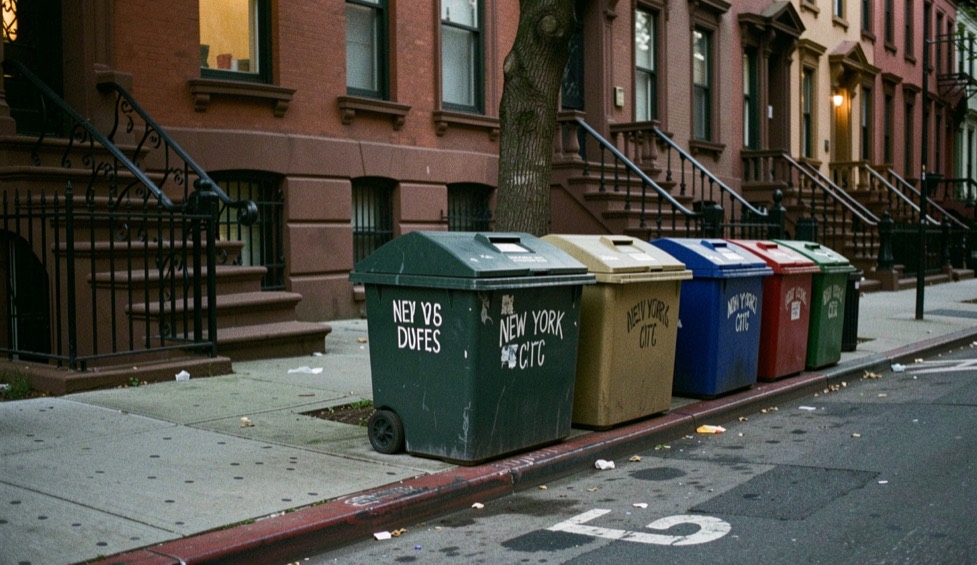
Container rules exist because the city discovered that bags alone were the problem. Containerization rules define the bin: a rigid container of a stated capacity with a tight-fitting lid. Bags inside such a bin are fine; bags beside it are a violation waiting for a sanitation officer. The rule quietly rewrites behavior by changing what the cheapest compliant option is.
The translation for our readers is direct. A breed-neutral dangerous dog ordinance works the same way: it names the compliant setup (secure enclosure, leash length, liability insurance) and makes compliance cheap and visible. A breed ban does the opposite: it makes the non-compliant object the dog itself, which is why it produces seizures instead of safer streets.
Weight, Volume and the Limits Nobody Reads
Every container rule carries silent limits: a maximum weight a bin may reach, a volume that counts as one set-out, and rules about what sits beside the bin versus inside it. These limits exist for the worker, not the resident: a bin beyond the weight limit is a lifting hazard, and overflow beside the container is litter the collection truck will not touch.
When you pull a municipal animal ordinance, hunt for its equivalent limits: how many dogs per household before a permit is required, what fence height counts as secure, how long a tether may be used. The limits are where the ordinance quietly decides which households are lawful and which are not, often without a single headline noticing.
Rules That Change With the Size of the Building
New York does not apply one rule to every building. Larger residential buildings, the kind with a superintendent and a refuse room, follow different set-out windows and different container duties than a two-family house. The threshold is written as a unit count, which is exactly how dog ordinances draw their own lines: number of animals before a kennel permit, weight thresholds, multi-unit versus single-family duties.
The practical lesson: never quote a municipal rule until you have checked which category it assigns you. Residents regularly receive sanitation summonses for following the small-building rule while living in a building the code counts as large, and dog owners get cited under multi-unit provisions they assumed did not apply to them.
Holiday Shifts and Missed Collections
The fourth moving part is the calendar. On a holiday the city suspends collection and slides the whole schedule forward, and the published rules tell residents to hold waste until the next lawful window rather than stack it early. Missed collections get reported through the city's service channels, and the rules for storing waste in the meantime are written down.
The Department of Sanitation's own pages publish the current windows, the container requirements and the holiday calendar, and they are the only version that matters on the day an officer writes a ticket. The same discipline applies to dog law: the current municipal code, not a blog post about it, decides your case.
What Enforcement Actually Looks Like
A rule on paper becomes a rule in the world through a written enforcement path. Sanitation officers write summonses on observation, the summons is heard by the city's administrative tribunal rather than a criminal court, and a resident can contest it with dated photographs and the published text itself. The pattern repeats in dog law exactly: the citation names an ordinance subsection, the hearing officer applies the written standard, and the owner who read the rule beforehand is the one most likely to beat it.
From Trash Windows to Dog Ordinances
The point of walking through set-out rules is not garbage. It is the pattern underneath: time windows, compliant equipment, property tiers and calendar shifts are the grammar of every municipal code in the country. Advocates who learn that grammar on a low-stakes subject can then read a proposed breed ordinance and immediately spot the set-out window, the compliant-container definition and the tiered duties hidden inside it.
That reading skill is what lets a resident stand up at a council meeting and say the ordinance's paperwork burden falls hardest on renters in large buildings, or that its appeal window is shorter than the one the sanitation code gives. Those arguments move votes. Our guide for owners facing a breed law and the record of communities that beat BSL both start from the same place: someone in the room had actually read the rule.