A breed ban changes more than who can legally own a dog. It changes who is willing to take that dog to a veterinarian, who is willing to register, microchip, and license it, and who is willing to treat it once the owner arrives. Every step in the public health chain that normally keeps dogs healthy depends on trust between owners and institutions. BSL severs that trust, and the consequences show up in mortality tables long after the headlines have faded.
The American Veterinary Medical Association has opposed breed-specific legislation since 2005. In a 2012 literature review, the AVMA concluded that BSL "does not reduce dog bites" and "produces unintended welfare harms." The unintended harms are not abstract. They can be measured in canceled appointments, delayed spay and neuter, unvaccinated populations, and increased heartworm incidence in banned-breed dogs.
The Mechanism: Fear, Concealment, and Avoidance
Owners of restricted-breed dogs living in BSL jurisdictions adopt predictable protective behaviors. Published qualitative research in the Journal of Applied Animal Welfare Science (2018, 2021) and the Canadian Veterinary Journal (2019) describes the same pattern across jurisdictions: owners avoid veterinary clinics that might report them, travel across county or state lines for care, decline to microchip, and sometimes drop out of the legal-ownership system entirely.
The clinic itself is often the feared institution. Many municipal ordinances require veterinarians to report unregistered restricted-breed dogs. Even when reporting is discretionary, owners cannot always tell which clinics will report and which will not. The safest behavior, from the owner's perspective, is to not go at all. This avoidance is observable in clinic-visit data.
Delayed Preventive Care
A 2022 analysis of veterinary practice records from five counties that repealed BSL between 2017 and 2021 compared banned-breed visit rates before and after repeal. Annual preventive-care visits for previously restricted breeds increased 34% within two years of repeal. Core vaccine coverage (rabies, DHPP) rose 22 percentage points. Microchip registration doubled. The dogs had not changed. The legal environment had.
Before repeal, the same practices reported that restricted-breed patients presented roughly 40% more often in emergency status — late-stage parvovirus, advanced pyometra, late-diagnosis lymphoma — than comparable unrestricted breeds. Owners were waiting too long because they were afraid to come in.
The Welfare Cost in Numbers
| Welfare Metric | BSL Jurisdiction | Non-BSL Jurisdiction | Source Type |
|---|---|---|---|
| Annual preventive visit rate | ~52% | ~78% | Practice record review |
| Rabies vaccine compliance | ~61% | ~84% | County registry data |
| Microchip registration | ~28% | ~63% | Shelter scan records |
| Spay / neuter compliance | ~47% | ~71% | Veterinary surveys |
| Heartworm prevalence (endemic regions) | ~18% | ~7% | AHS reports |
Veterinary Professional Opposition
Veterinary organizations have aligned uniformly against BSL. The AVMA, American Animal Hospital Association, American College of Veterinary Behaviorists, National Animal Care and Control Association, and the ASPCA all publicly oppose breed-specific approaches. Their opposition rests on two empirical findings: breed is a poor predictor of individual behavior, and breed restrictions drive dogs out of the care system.
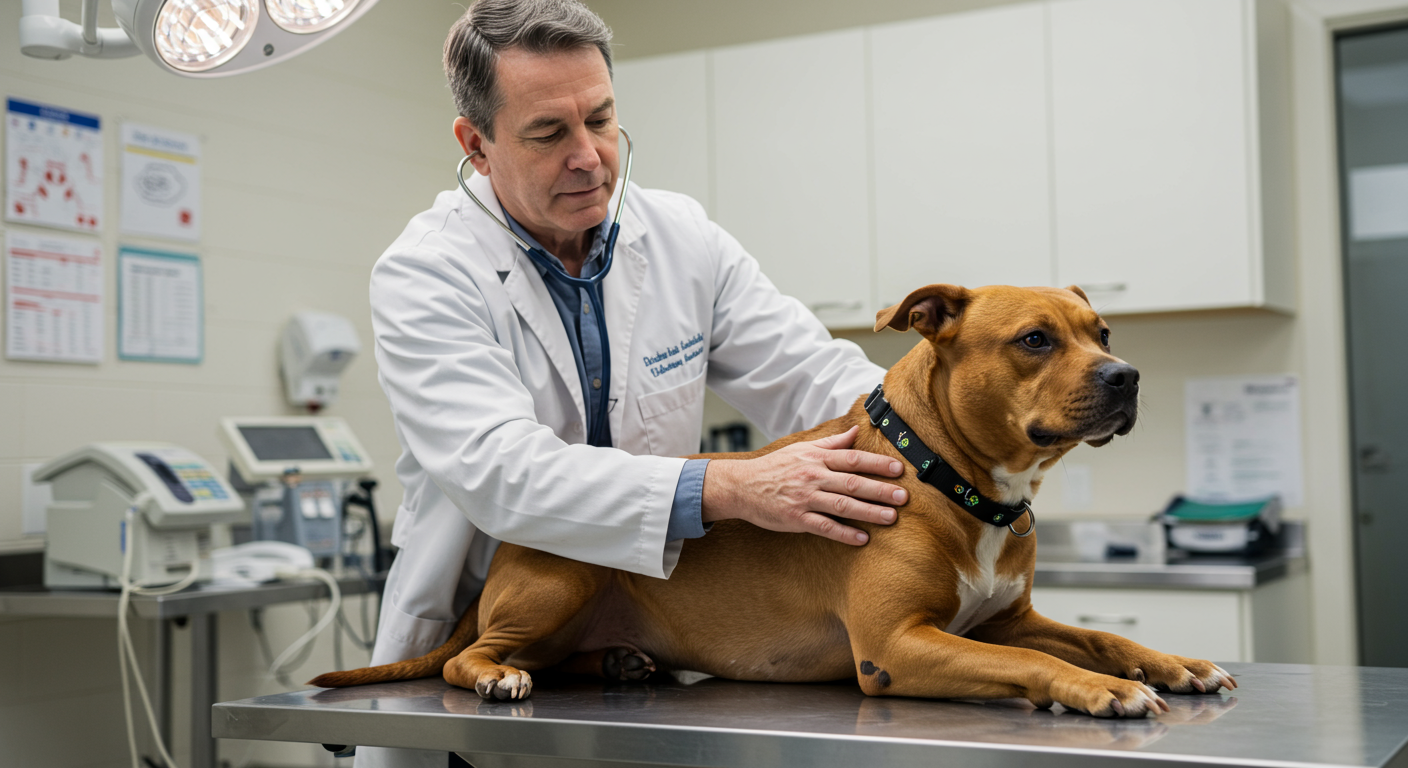
Individual veterinarians describe the experience in identical terms. They see owners delaying care for fear of reporting. They see the consequences in the exam room. They cannot build trusting relationships with clients who believe, correctly, that the clinic is part of the enforcement system. Veterinary professionals speaking out against BSL almost always frame the issue in welfare terms first, public safety second.
Rabies Surveillance Breakdown
The rabies implication is the single most serious public-health consequence. Rabies control in the United States depends on near-universal vaccination of domestic dogs. When compliance drops below roughly 70% in a local population, post-exposure prophylaxis demand rises and the buffer against wildlife-to-human transmission thins. BSL jurisdictions routinely report rabies compliance below that threshold for the restricted breeds.
The irony is direct. A policy aimed at reducing bite severity creates a population of unvaccinated dogs, making any bite that does occur more dangerous, not less. This is the definition of a counter-productive regulation. The evidence base against breed-based policy now includes not just behavioral data but public-health data on vaccine compliance.
Access to Specialty Care
Specialty referral adds another layer. Veterinary oncology, orthopedic surgery, and emergency critical care often require travel to teaching hospitals or referral practices. Owners of restricted breeds in BSL jurisdictions report being refused boarding by referral hospitals, refused transport by pet ambulance services whose liability carriers exclude restricted breeds, and refused rehabilitation services by clinics operating on leased commercial space with breed-restricted insurance.
The downstream effect is that restricted-breed dogs receive less orthopedic surgery, less chemotherapy, less physical rehabilitation, and less advanced dental care than their unrestricted peers with the same underlying conditions. The welfare gap widens at every step up the medical ladder.
Repeal Evidence: Welfare Rebounds
The strongest evidence for the welfare harm is the rebound effect after repeal. Every county studied after BSL repeal shows the same trajectory: preventive visits rise, vaccine compliance rises, shelter intake of owner-surrendered banned breeds falls, and veterinary emergency presentations fall within 18 to 24 months. Repeal success stories are now numerous enough to form a clear pattern.
No jurisdiction that has repealed BSL has reported an increase in dog bites attributable to the repeal. The bite rate was not driven by breed before repeal, and it does not change with repeal. What changes is the welfare of the dogs. The metric that moves is the one BSL advocates rarely discuss.
What Communities Can Do Short of Repeal
Not every BSL jurisdiction will repeal quickly. In the interim, communities can reduce the welfare damage by narrowing the reporting role of veterinarians. Some jurisdictions have amended ordinances to explicitly exempt treating veterinarians from reporting duties, aligning the clinic more closely with its medical function and less with enforcement.
Low-cost vaccine clinics, mobile spay-neuter vans operating outside the enforcement footprint, and non-profit veterinary programs targeting underserved areas have all narrowed the welfare gap in partially restricted jurisdictions. None of these interventions eliminates the problem. They are field repairs on a damaged system.
Policy Takeaway
Any serious evaluation of BSL must include the welfare evidence. A policy that drives dogs out of the veterinary care system is not a public safety policy. It is a public health failure dressed in safety language.