Every time a child is bitten by a dog, the same predictable cycle plays out. Headlines scream the breed. Politicians demand action. Parents understandably demand answers. And almost invariably, someone proposes a breed ban as the solution. Ban the dangerous breeds and our children will be safe.
I have worked in dog rescue for over a decade. I have three children of my own who have grown up surrounded by rescued German Shepherds and Belgian Malinois. I understand the instinct to protect children at any cost. What I cannot accept is a policy response that feels good but accomplishes nothing, especially when evidence-based alternatives exist that actually work.
The uncomfortable truth is that breed-specific legislation has never been shown to reduce dog bite injuries in children. Not in any jurisdiction. Not in any country. Not in any study. Meanwhile, the programs that do protect children receive a fraction of the funding and attention that breed bans consume.
What the Data Shows About Children and Dog Bites
Children are disproportionately affected by dog bites. The CDC reports that children between ages five and nine have the highest rate of dog bite emergency visits. Boys are bitten more frequently than girls. Most bites to young children involve the face and head because of the child's height relative to the dog.
These statistics are alarming and demand a serious policy response. But when you look at the circumstances surrounding child bite incidents, the picture that emerges contradicts everything BSL promises.
Most bites to children come from familiar dogs. A landmark study by the American Veterinary Medical Association found that 77% of bite injuries to children involved a dog known to the child, either the family's own pet or a dog belonging to a neighbor, friend, or relative. These are not encounters with stray dogs of dangerous breeds roaming the streets. These are interactions between children and dogs that live in their homes or their social circles.
Supervision is the critical variable. Research consistently identifies lack of adult supervision as the single strongest predictor of serious bite injuries in children. A 2007 study in Injury Prevention found that 87% of bites to children under six occurred while the child was unsupervised or inadequately supervised with the dog. Breed did not emerge as a significant predictor once supervision status was controlled for.
Child behavior triggers many incidents. Young children frequently engage in behaviors that provoke defensive responses from dogs: pulling ears and tails, climbing on dogs, disturbing sleeping or eating dogs, cornering dogs, and hugging dogs around the neck. These provocations trigger bites from dogs of every breed. A Golden Retriever whose ears are being pulled by a toddler may bite just as readily as any other breed.
The Numbers BSL Ignores
77% of child bite injuries involve a known dog. 87% of bites to children under six occur without adequate supervision. These are the factors that predict child injuries, not the breed of the dog.
Why Breed Bans Cannot Protect Children
Understanding why BSL fails to protect children requires connecting the circumstances of child bite injuries to the mechanics of breed ban enforcement.
BSL addresses the wrong risk factor. If most child bites involve familiar dogs in the home, banning specific breeds in public spaces or across a jurisdiction does nothing to address the primary risk. The family Labrador that bites a toddler who fell on it while it was sleeping is not covered by any BSL. The neighbor's Golden Retriever that nips a child reaching into its food bowl faces no breed restrictions. BSL targets a characteristic, breed, that does not predict child bite injuries while ignoring the factors that do: supervision, education, and dog management. As the broader scientific evidence confirms, breed explains only about 9% of behavioral variation in individual dogs.
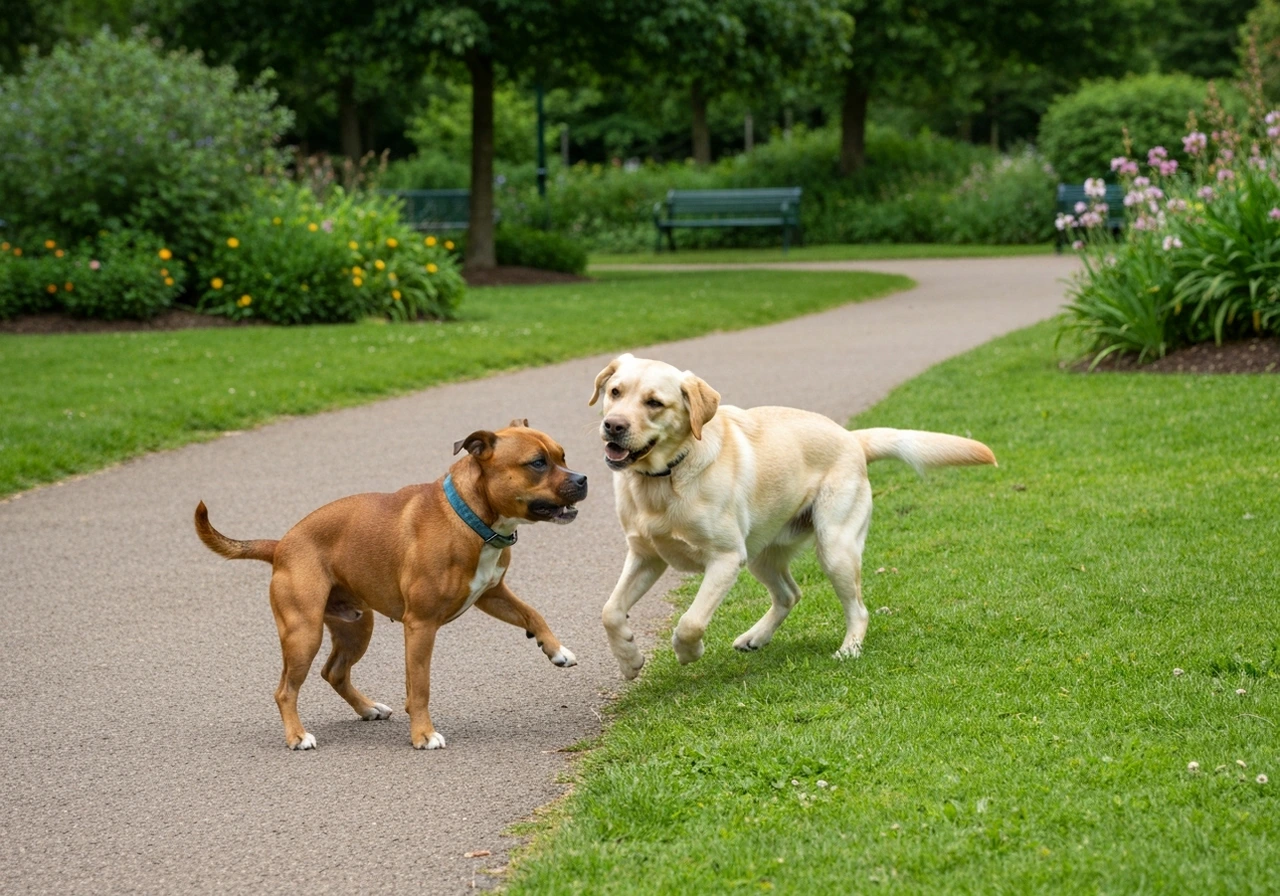
BSL creates a false sense of security. This may be its most dangerous effect on child safety. When parents believe that breed bans have removed dangerous dogs from their community, they may relax the supervision and precautions that actually prevent bites. A parent who thinks pit bulls are the problem may not teach their child how to safely interact with the family's Cocker Spaniel, a breed with well-documented bite history that never appears on BSL lists.
The breeds targeted by BSL are not the breeds most likely to bite children. Multiple studies have found that the dogs most frequently involved in child bite incidents are medium to large family dogs of common breeds: Labrador Retrievers, Golden Retrievers, German Shepherds, and various mixed breeds. These breeds appear frequently in bite statistics not because they are more aggressive but because they are the most popular family dogs and therefore have the most contact with children. Ironically, the expansion of BSL to include herding breeds like German Shepherds still misses the fundamental point that any breed of dog can bite a child under the wrong circumstances.
Breed identification failure compounds the problem. Even if certain breeds were more dangerous to children, which the evidence does not support, the breed misidentification crisis means enforcement cannot reliably target those breeds. Resources consumed by misidentifying and seizing dogs that turn out to be unrestricted breeds are resources not spent on programs that actually reduce child injuries.
What Actually Protects Children
Decades of research have identified effective strategies for reducing dog bite injuries in children. None of them involve breed bans. All of them require investment, education, and sustained effort, which may explain why politicians prefer the simpler-sounding breed ban approach.
Child education programs work. The Blue Dog program developed in Belgium, the BARK program in the United States, and similar initiatives teach children between ages three and seven how to safely interact with dogs. These programs cover recognizing warning signs in dog body language, appropriate and inappropriate ways to approach and touch dogs, and what to do if a strange dog approaches. A 2009 study in Injury Prevention found that children who completed the Blue Dog program showed significantly improved safe behavior around dogs compared to control groups.
Parent education fills the supervision gap. Many parents do not recognize the warning signs of dog stress or understand when a dog-child interaction has become risky. Programs that educate parents about canine body language, appropriate supervision levels for different ages, and household management strategies when dogs and young children coexist reduce bite incidents by addressing the actual risk factors. Organizations like The Ethical Breeder emphasize that responsible ownership starts with understanding dog behavior and establishing safe boundaries, especially in households with children.
Dog socialization and training prevent incidents. Dogs that are properly socialized with children from a young age are significantly less likely to react fearfully or defensively to normal child behavior. Puppy socialization programs that include controlled exposure to children, combined with ongoing training, create dogs that tolerate the unpredictable movements and sounds that children produce. This is a breed-neutral approach that benefits every household with both dogs and children.
Household management rules save lives. Simple rules like never leaving a child under six unsupervised with any dog, providing dogs with safe retreat spaces away from children, separating dogs and children during feeding and sleeping times, and teaching children to ask permission before approaching any dog prevent the vast majority of serious bite incidents. These rules work regardless of breed.
Programs That Save Children
Child dog-safety education, parent training on canine body language, proper dog socialization, and household management rules have all been shown to reduce bite injuries. None require identifying or restricting specific breeds.
The Communities That Got It Right
Several jurisdictions have invested in child-focused dog safety programs instead of breed bans, and the results speak for themselves.
Calgary's comprehensive approach included school-based dog safety education alongside its licensing and enforcement reforms. The city brought trained dog handlers into elementary schools to teach children safe interaction. Combined with their breed-neutral dangerous dog law, Calgary achieved a 56% reduction in dog bites across all demographics, including children. No breed ban was necessary because the programs targeted the actual causes of bite injuries.
The Netherlands provides a telling comparison. During their fifteen years of national BSL from 1993 to 2008, child bite injury rates did not decline. After repealing BSL and redirecting resources toward education and behavior-based approaches, the country saw meaningful improvement. The lesson was painful but clear: the years spent enforcing a breed ban were years wasted for child safety.
Austin, Texas implemented a breed-neutral approach combining strong dangerous dog laws with community education programs that specifically targeted child safety. Their dog bite rates declined across all age groups, with the most dramatic improvement among children under ten. Austin achieved this without restricting a single breed, proving that communities that choose evidence over fear protect children more effectively.
The Financial Argument for Child-Focused Programs
Beyond effectiveness, the cost comparison between BSL and child education programs is staggering. The documented financial costs of BSL enforcement typically run into hundreds of thousands of dollars annually for a single jurisdiction. A comprehensive school-based dog safety program serving the same community might cost five to ten thousand dollars per year.
Every dollar spent seizing misidentified dogs, housing them in shelters, litigating breed determinations, and conducting DNA tests is a dollar not spent on a program that teaches a child to stand still like a tree when approached by an unfamiliar dog, or to never pet a dog that is eating, or to recognize when a dog is showing fear signals and needs space. The full scope of responsible ownership programs shows how comprehensive alternatives — education, licensing, behavior-based law — achieve what BSL promises but never delivers.
The resource allocation reflects priorities. When a city spends $300,000 on breed-specific enforcement and nothing on child education programs, it is choosing political theater over children's safety. That is not a controversial claim. It is a mathematical one.
What Parents Need to Know
If you are a parent concerned about your child's safety around dogs, the evidence points to clear, actionable steps that matter far more than the breed of dogs in your neighborhood.
Supervise every interaction. No child under six should be alone with any dog, regardless of breed, size, or temperament. Dogs are animals. Children are unpredictable. Supervision is not optional.
Teach your children early. Children as young as three can learn basic rules: do not approach unfamiliar dogs, always ask the owner's permission, let the dog sniff your hand first, do not touch a dog's face or tail, never bother a dog that is eating or sleeping, and stand still if a loose dog approaches.
Learn canine body language yourself. A dog that yawns repeatedly, licks its lips, turns its head away, shows whale eye (whites of the eyes visible), tucks its tail, or freezes in place is showing stress signals. These behaviors precede most bites. Recognizing them and intervening before a bite occurs is far more protective than any breed ban. Resources from Shepherd Health Journal cover canine behavioral signals in depth, and understanding these patterns is essential for any household that includes both dogs and children.
Set up your home for success. Give your dog spaces where children cannot follow: a crate, a gated room, or a comfortable area that is explicitly off-limits to kids. Feed dogs in a separate area. Teach children that when the dog goes to its space, it means the dog needs a break. These simple boundaries prevent the vast majority of home-related bite incidents.
Choose the right dog for your family. If you are bringing a new dog into a home with young children, focus on the individual dog's temperament rather than breed. Meet the dog multiple times with your children present. Ask about the dog's history with children. Consider adult dogs with known temperament profiles rather than puppies whose adult behavior is less predictable.
Demanding Better for Our Children
When a politician responds to a child bite incident by proposing a breed ban, they are not protecting children. They are protecting themselves politically while ignoring the solutions that work. The evidence against BSL is overwhelming in general, and the evidence specifically regarding child safety is equally clear.
Our children deserve evidence-based protection, not policy theater. They deserve schools that teach them how to read a dog's body language. They deserve parents educated about supervision requirements. They deserve communities where every dog, regardless of breed, is properly socialized and managed by responsible owners.
Every dollar spent on breed-specific enforcement is a dollar stolen from programs that actually keep children safe. Every breed ban passed is a missed opportunity to invest in education. Every dog seized based on appearance is a distraction from the supervision, training, and management strategies that prevent bites.
Our children cannot wait for politicians to catch up with the science. But if you are ready to fight for evidence-based policy in your community, you can demand that child safety programs replace the expensive failure of breed bans. Your children, and your community's dogs, will be safer for it.
Protect Children With Evidence, Not Fear
Child education programs, parent training, proper supervision, and breed-neutral dog management have all been proven to reduce bite injuries. Breed bans have not. Every community that prioritizes evidence over politics makes its children safer.